
Lightning Protection Services in Nizamabad
Protecting Buildings and Electrical Infrastructure from Lightning Risks
Lightning strikes can create serious risks for buildings, electrical installations, machinery and sensitive equipment. A direct strike or nearby lightning activity may cause fire hazards, equipment damage, insulation failure and sudden electrical disturbances. Facilities with exposed rooftops, outdoor installations, communication equipment and extensive electrical networks require suitable protection arrangements.
Risha Power Solution & Constructions provides Lightning Protection Services in Nizamabad for industrial units, commercial buildings, institutional facilities and other properties. We help assess the site, identify possible exposure points and plan suitable protection measures according to the building layout and electrical requirements.
A properly designed lightning protection arrangement provides a controlled path for lightning current to travel safely towards the ground. It also helps reduce the possibility of dangerous side flashes and electrical surges affecting connected systems.
Why Lightning Protection Needs Proper Site Planning
Every building has a different structure, height, roof design and electrical arrangement. Installing protection equipment without considering these factors may leave important areas exposed. A suitable system should be planned after understanding how the property is constructed and what equipment needs protection.
Important factors considered during planning include:
Building Height and Structure: Taller buildings, rooftop installations and structures with exposed sections may require special attention when selecting protection points and conductor arrangements.
Roof Layout: Metal sheets, water tanks, solar panels, antennas and other rooftop equipment can influence how the protection system should be arranged.
Surrounding Environment: Open land, nearby structures and the position of the facility help determine its exposure to lightning activity.
Electrical Infrastructure: Distribution panels, transformers, control systems and connected machinery should be considered while planning protection measures.
Grounding Conditions: Soil characteristics and the existing earthing arrangement influence how lightning current can be safely discharged.
Equipment Sensitivity: Electronic controls, communication devices and automation systems may require additional surge protection.
This site-specific approach helps avoid unsuitable installations and supports better coordination between external lightning protection and internal electrical safeguards.
Our Approach to Lightning Protection Installation
A reliable installation involves more than fixing a lightning rod on the rooftop. The entire current path, connection points and grounding arrangement need to be considered.
Our work approach includes the following stages:
Initial Site Inspection: We review the building structure, roof arrangement, existing electrical infrastructure and possible exposure areas before suggesting a suitable solution.
Protection Layout Planning: Suitable locations for air terminals, down conductors and earth connections are identified according to the site requirements.
Component Selection: Protection components are selected based on the installation environment, building arrangement and electrical requirements.
Installation and Connection: The required components are installed and connected to form a coordinated protection path.
System Verification: Important connections, continuity and accessible installation points are checked after the work.
Handover and Recommendations: The client is informed about the completed arrangement and any further inspection or maintenance requirements.
Why Choose Risha Power Solution & Constructions?
Selecting a suitable contractor is important because Lightning Protection Services in Nizamabad involves building structure, electrical connections and grounding arrangements. Risha Power Solution & Constructions approaches each project by considering the property’s layout and the protection requirements of its electrical infrastructure.
Site-Based Planning: Recommendations are developed after considering the actual building and installation conditions.
Integrated Electrical Knowledge: Lightning protection requirements can be reviewed alongside earthing, electrical panels and power-related installations.
Industrial and Commercial Experience: We work with different types of electrical and infrastructure requirements.
Installation-Focused Approach: Attention is given to component placement, connection routes and coordination of the protection system.
Inspection Support: Existing installations can be reviewed to identify visible defects and areas requiring attention.
Practical Recommendations: Suggestions are based on the site’s requirements rather than using the same arrangement for every property.
Main Components Used in a Lightning Protection System
A lightning protection system consists of interconnected components that work together to receive, conduct and discharge lightning current. Each component has a specific purpose, and the complete arrangement must be properly coordinated.
1. Air Termination System: Air terminals or lightning rods are installed at suitable locations to provide designated points for receiving lightning strikes. Their positioning depends on the building’s dimensions, roof geometry and protection requirements.
2. Down Conductor Network: Down conductors provide a path between the air termination arrangement and the earthing system. Their routing should be planned to maintain suitable continuity and reduce unnecessary bends or unsuitable connections.
3. Earth Termination Arrangement: The earth termination system helps discharge lightning current into the ground. Its design and installation should consider soil conditions, electrode arrangements and the requirements of the overall protection system.
4. Equipotential Bonding: Bonding connects relevant metallic components to help reduce dangerous potential differences during lightning events. Proper coordination is important around metal structures, service entries and other conductive installations.
5. Surge Protection Devices: Surge protection devices help protect electrical and electronic equipment against transient overvoltages. They may be installed at suitable distribution points depending on the electrical system and the sensitivity of connected equipment.
Internal Surge Protection for Electrical Equipment
Risha Power Solution can assist with identifying suitable surge protection requirements for different electrical installations.
Areas Where Surge Protection May Be Required
1. Main Distribution Boards: Surge protection at the main distribution level can help limit transient overvoltages entering the building’s electrical network, depending on the system configuration and device selection.
2. Sub-Distribution Panels: Additional protection may be considered at downstream distribution boards where circuits supply important equipment or separate operational areas.
3. Automation and Control Systems: Industrial control panels, PLCs and automation equipment may be vulnerable to transient disturbances. Suitable protection should be considered based on their power and signal connections.
4. Communication and Data Lines: Communication networks, monitoring systems and data connections may require compatible surge protection devices to address surges entering through external lines.
5. Sensitive Electronic Equipment: Equipment such as electronic instruments, monitoring devices and specialised systems may need additional protection according to the manufacturer’s recommendations and installation conditions.
Lightning Protection Solutions for Different Property Types
1. Industrial Buildings and Manufacturing Units
Industrial facilities may have large rooftops, metal structures, production machinery and extensive electrical distribution networks. Lightning protection planning should consider these areas along with outdoor equipment and connected control systems.
2. Commercial Complexes and Office Buildings
Commercial properties often contain computers, communication equipment, air-conditioning systems and other electronic installations. A suitable protection arrangement helps address risks to both the building structure and its electrical infrastructure.
3. Warehouses and Storage Facilities
Warehouses may have wide roof spans, exposed metal structures and stored materials that require careful safety planning. Protection points and down conductors should be positioned with the building design in mind.
4. Schools, Colleges and Institutional Buildings
Educational and institutional properties contain classrooms, laboratories, administrative areas and electrical equipment. Their protection planning should account for building occupancy, rooftop exposure and the distribution of electrical installations.
5. Buildings with Rooftop Equipment
Properties with solar panels, water tanks, antennas, HVAC units or other rooftop equipment need coordinated lightning protection planning. The arrangement should consider equipment placement and avoid creating unprotected sections.
Benefits of a Properly Planned Lightning Protection System
A suitable lightning protection arrangement supports the safety and reliability of a property’s infrastructure. Its benefits include:
Provides a designated path for lightning current to reach the grounding system.
Helps reduce the risk of structural damage associated with lightning strikes.
Supports protection of electrical distribution infrastructure.
Helps reduce transient overvoltage risks when coordinated surge protection is installed.
Improves awareness of grounding and bonding requirements.
Supports better planning for maintenance and future building modifications.
Helps facilities maintain a more organised electrical safety arrangement.
Situations That May Require a Lightning Protection System Review
A building’s original protection arrangement may no longer match its current structure or electrical requirements. A review is useful when major changes take place or when visible problems are identified.
Consider a professional inspection in situations such as:
Building Extension or Additional Floors: Structural expansion may create new exposed areas that were not included in the original protection layout.
Installation of Rooftop Solar Panels: New rooftop equipment can affect air terminal positioning and conductor routes.
Corrosion on External Components: Rust or deterioration around connections may affect the physical condition of the installation.
Changes to Earthing Infrastructure: Modifications to grounding arrangements should be reviewed to ensure coordination with lightning protection.
Repeated Equipment Damage: Recurring damage to electrical or electronic equipment may require investigation of surge protection and grounding arrangements.
New Electrical Distribution Systems: Additional panels, transformers or machinery may require a review of internal surge protection.
Visible Damage After Severe Weather: Conductors, mounting brackets and external connections should be inspected if they appear damaged or displaced.
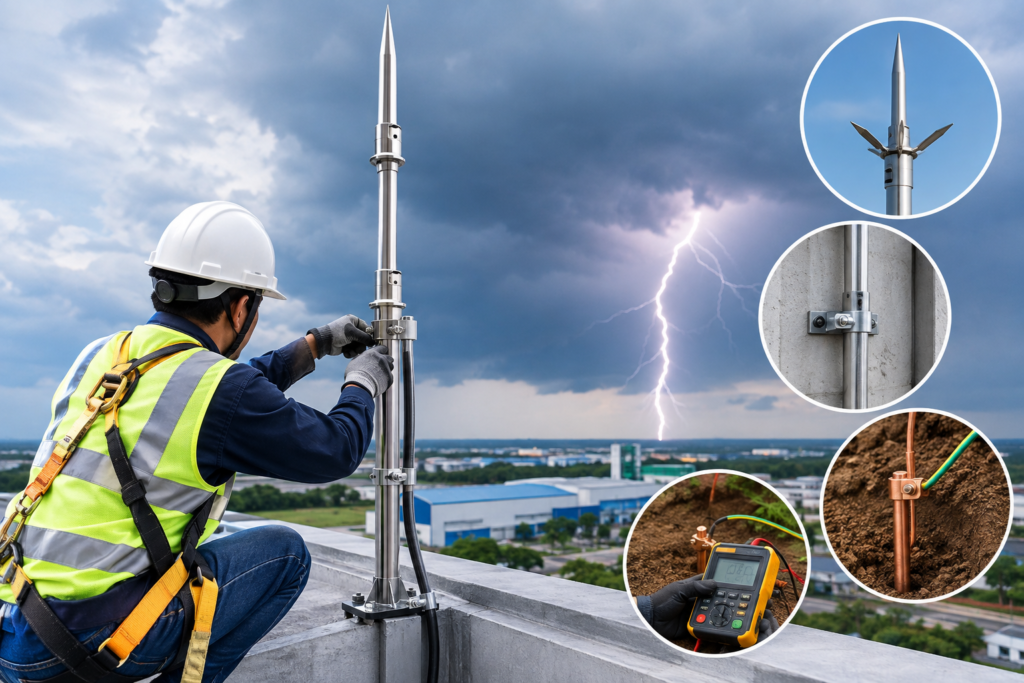
What Should Be Checked During Maintenance?
1. Air Terminal Condition
Inspect air terminals for physical damage, corrosion, loosened fittings or changes in their mounting arrangements. Damaged components may need repair or replacement.
2. Down Conductor Connections
Accessible conductor routes and connection points should be examined for looseness, corrosion, physical damage and signs of deterioration.
3. Earthing Connections
Earth termination connections should be checked for visible damage and deterioration. Appropriate testing can help assess the condition of the grounding arrangement.
4. Bonding Points
Metallic structures and relevant conductive parts should be reviewed to identify disconnected, damaged or deteriorated bonding connections.
5. Surge Protection Devices
Surge protection devices should be checked for visible damage and status indications. Devices that have reached their end of life or show failure indications may require replacement.
6. Rooftop Changes
New solar panels, antennas, water tanks or other rooftop additions can affect the original protection layout. The system should be reviewed whenever significant structural changes are made.
7. Records and Previous Inspection Findings
Previous inspection reports and maintenance records help track recurring issues, component replacements and changes made to the installation.
Frequently Asked Questions (FAQ)
1. Why is lightning protection important for industrial buildings in Nizamabad?
Industrial buildings may contain large roof structures, machinery, electrical panels and control systems. A properly planned lightning protection arrangement helps manage lightning current and reduce risks to the building and its electrical infrastructure.
2. What is the difference between a lightning arrester and a surge protection device?
A lightning air terminal or rod forms part of an external system designed to receive a lightning strike and provide a path towards the earth. A surge protection device is installed within an electrical or communication system to limit transient overvoltages affecting connected equipment.
3. Does installing a lightning rod protect all electrical equipment inside a building?
No. An external lightning protection system alone does not guarantee protection of every internal electrical device. Proper bonding, grounding and coordinated surge protection may also be required.
4. How often should a lightning protection system be inspected?
Inspection frequency depends on the type of building, environmental conditions, applicable requirements and the condition of the installation. It should also be reviewed after significant building modifications, visible damage or a suspected lightning event.
5. Can an existing building in Nizamabad be fitted with lightning protection?
Yes. An existing property can be assessed for a suitable lightning protection arrangement. The building structure, rooftop equipment, electrical system and available earthing infrastructure should be examined before installation.
6. Do rooftop solar panels affect lightning protection planning?
Yes. Solar panels and their mounting structures can change the rooftop layout. Their position should be considered when reviewing air terminals, conductor routes, bonding and surge protection requirements.
Contact Risha Power Solution for Lightning Protection Services
Protecting a property from lightning-related risks requires a coordinated approach to external protection, grounding, bonding and internal surge protection. Risha Power Solution & Constructions provides Lightning Protection Services in Nizamabad for industrial, commercial and institutional properties based on their site conditions and electrical requirements.
Whether you are planning a new installation, modifying an existing building or reviewing an older protection arrangement, our team can help assess the work involved and suggest suitable solutions.
Contact Risha Power Solution to discuss your building requirements and arrange a site inspection.
About Us
Risha Power Solution and Constructions takes this opportunity to introduce ourselves as a Safety, Health, Hygiene, Risk, and Environmental Management company based in Hyderabad, India.