
Transformer Testing Services in Nizamabad
Transformer Testing for Reliable Power Distribution
Transformers play an important role in supplying electricity at the required voltage levels across industrial plants, commercial buildings and infrastructure facilities. Their operating condition directly affects power distribution, equipment performance and the continuity of electrical operations. Even a minor internal defect can gradually develop into a major operational problem if it is not identified in time.
Risha Power Solution & Constructions provides Transformer Testing Services in Nizamabad to help businesses understand the condition of their transformers and identify possible electrical or insulation-related concerns. Testing helps evaluate important transformer parameters, examine component condition and identify irregularities that may require further attention.
Our approach focuses on the actual condition of the equipment rather than relying only on its age or operating history. Whether a transformer is newly installed, regularly used or showing signs of abnormal operation, suitable testing can support informed maintenance and repair decisions.
What Transformer Testing Can Reveal About Equipment Condition
A transformer may continue supplying power even when certain internal components are beginning to deteriorate. Changes in winding condition, insulation quality, electrical connections or oil properties may not always be immediately visible from outside.
Testing provides useful information about these conditions and helps maintenance teams understand whether further investigation is necessary.
Some important areas that can be evaluated include:
Insulation Condition: Insulation testing helps assess the electrical resistance between windings and between windings and earth. Low or changing readings may indicate moisture, contamination or insulation deterioration.
Winding Integrity: Electrical measurements can help identify abnormal resistance values that may be associated with loose connections, damaged conductors or winding-related concerns.
Voltage Transformation Ratio: Ratio testing checks whether the relationship between primary and secondary winding voltages corresponds with the transformer’s design and tap position.
Electrical Connection Condition: Inspection and suitable measurements help identify poor connections, contact deterioration and other issues that may affect current flow.
Oil Quality: For oil-filled transformers, oil testing can provide information about insulating oil condition and possible contamination or degradation.
Operational Abnormalities: Unusual heating, noise, leakage or repeated protection operation can indicate conditions that need further examination.
Signs That Your Transformer May Require Testing
Transformer problems do not always result in an immediate breakdown. In many cases, early warning signs appear during normal operation. Recognising these changes can help prevent avoidable interruptions.
Watch for These Operational Symptoms
1. Repeated Transformer Tripping: Frequent operation of protective devices may indicate overloading, an internal fault or an issue within the connected electrical system. The cause should be investigated before the transformer is returned to normal operation.
2. Unusual Temperature Rise: A transformer operating hotter than expected may be experiencing excessive loading, cooling problems, poor connections or internal abnormalities. Temperature conditions should be evaluated alongside the load and operating environment.
3. Abnormal Noise or Vibration: A noticeable change in humming, buzzing or vibration may indicate a mechanical or magnetic issue. Comparing the sound with the normal operating condition can help identify when further inspection is required.
4. Oil Leakage or Discolouration: Oil leakage can reduce the available insulating and cooling medium. Changes in oil appearance may also justify an inspection or laboratory analysis, depending on the transformer’s condition.
5. Unexpected Voltage Variation: Voltage differences at the transformer output may be associated with load conditions, tap settings, winding issues or upstream supply variations. Testing can help narrow down the possible causes.
6. Visible Damage Around Bushings and Terminals: Cracks, contamination, overheating marks or loose connections around accessible external components may affect safe operation and should be examined by qualified personnel.
How We Approach Transformer Testing Projects
At Risha Power Solution, testing is planned according to the equipment details and the purpose of the inspection. This helps ensure that the selected checks provide useful information about the transformer rather than performing unrelated tests.
1. Collecting Transformer Details: We begin by understanding the transformer rating, voltage levels, type, installation details and available maintenance history. These details help determine the relevant testing requirements.
2. Reviewing the Operating Condition: The reported symptoms, loading pattern, visible condition and previous faults are considered before selecting diagnostic checks.
3. Identifying Suitable Tests: The required tests are selected according to the transformer design, applicable procedures and the objective of the inspection.
4. Performing Electrical Measurements: Suitable testing instruments and methods are used to obtain measurements for the selected parameters. Testing is carried out with appropriate isolation and safety precautions.
5. Evaluating Test Observations: Recorded values are reviewed against applicable specifications, manufacturer information and relevant test references. Any unusual readings are considered in the context of the equipment.
6. Reporting and Further Recommendations: The findings can help identify areas requiring additional investigation, maintenance or corrective action. Recommendations depend on the actual test results and equipment condition.
Types of Transformer Tests and Their Purpose
Different tests are used to examine different parts of a transformer. The selection depends on transformer capacity, design, operating history and the reason for testing.
1. Insulation Resistance Test
This test measures the resistance of insulation between the transformer windings and between the windings and earth. It helps identify possible moisture ingress, contamination or deterioration in insulation materials.
2. Winding Resistance Test
Winding resistance measurements help assess the electrical condition of transformer windings and their associated connections. Differences between phases or unexpected readings may indicate a need for further investigation.
3. Transformer Turns Ratio Test
The turns ratio test verifies the relationship between the primary and secondary windings. Incorrect readings may point towards winding problems, incorrect tap positions or other internal irregularities.
4. Magnetic Balance Test
This test is used on suitable transformer designs to examine the magnetic circuit and identify possible abnormalities in the core or winding arrangement. Results are interpreted according to the transformer’s configuration.
5. Vector Group Verification
Vector group verification checks the phase relationship and winding connection configuration of a transformer. It is particularly important before parallel operation or when confirming transformer connection details.
6. Transformer Oil Testing
Oil-filled transformers use insulating oil for insulation and cooling. Testing may include dielectric breakdown voltage and other oil-quality checks. Additional laboratory analysis, such as dissolved gas analysis, may be considered when the condition or operating history indicates a need.
Testing Requirements for Different Transformer Applications
Transformers operate in different environments, and their testing requirements can vary depending on their role within the electrical network.
Industrial Power Transformers: These units supply power to production facilities and heavy electrical loads. Testing helps assess winding condition, insulation performance and other important operating parameters.
Distribution Transformers: Used to supply electricity at distribution voltage levels, these transformers may require routine electrical checks and condition assessment.
Commercial Building Transformers: Transformers serving offices, shopping complexes and commercial properties need suitable inspection and testing to support dependable power distribution.
Infrastructure Transformers: Installations supporting utilities and infrastructure may require condition evaluation based on their operating environment and maintenance schedule.
Transformers Supporting Critical Loads: Facilities that depend on continuous electrical supply may use testing results to plan maintenance and reduce the risk of unexpected interruptions.
Why Choose Risha Power Solution & Constructions?
Transformer Testing Services in Nizamabad requires a clear understanding of electrical measurements, equipment design and operating conditions. Risha Power Solution & Constructions supports industrial and commercial electrical requirements with a practical approach to inspection and testing.
Requirement-Based Testing: The testing plan is selected according to transformer specifications and the purpose of the assessment.
Attention to Electrical Measurements: Important readings are considered carefully to identify unusual conditions that may need further examination.
Support for Different Applications: Testing requirements can be discussed for industrial, commercial and distribution transformer installations.
Maintenance-Oriented Evaluation: Findings can support maintenance planning and help identify areas that need corrective attention.
Integrated Electrical Understanding: Transformer condition can be considered alongside connected panels, cables, earthing and other parts of the electrical system.
Clear Technical Communication: Observations and recommendations are explained to help clients understand the condition of their equipment.
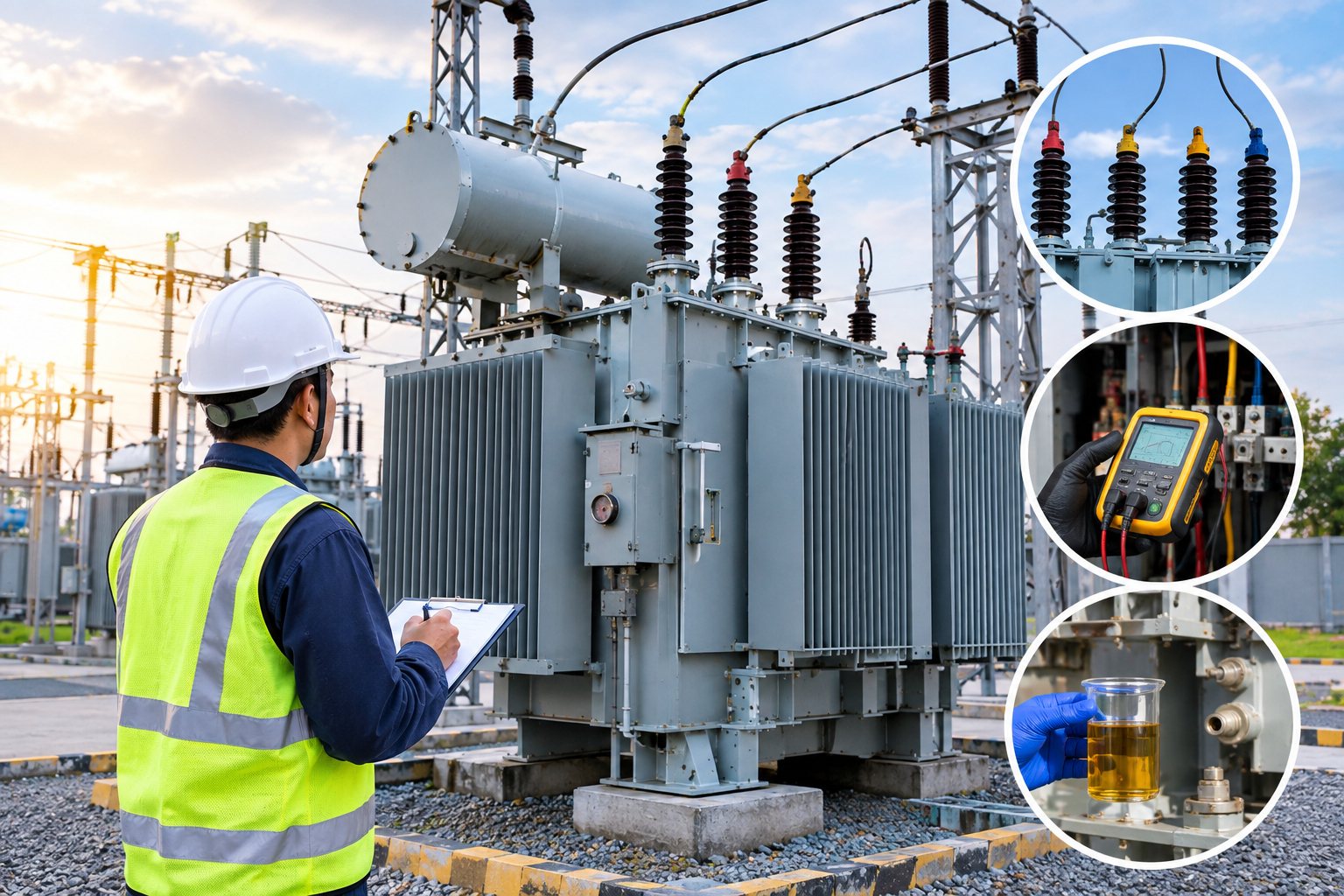
Transformer Testing for Different Operating Requirements
Not every transformer is tested for the same reason. A newly installed unit, an existing distribution transformer and a transformer showing operational abnormalities may require different testing arrangements.
New Transformer Before Commissioning
Before a transformer is put into service, suitable checks help verify its electrical condition and confirm important installation-related parameters. This supports the commissioning process and helps identify issues before regular operation begins.
Transformers During Scheduled Maintenance
Periodic testing provides a reference for comparing electrical measurements over time. Changes in readings can help maintenance teams identify developing concerns and plan corrective work.
Transformers After Repair or Reconditioning
Following winding repairs, insulation work or other major maintenance, appropriate tests help assess the condition of the repaired equipment before it returns to operation.
Transformers Showing Abnormal Behaviour
Unexpected temperature rise, unusual sound, oil leakage, voltage variation or repeated tripping may require diagnostic testing. The selected tests should be based on the symptoms and the transformer's operating conditions.
Frequently Asked Questions (FAQ)
1. Why should transformers be tested regularly?
Regular testing helps assess insulation, winding condition and other important electrical parameters. It can also help identify developing problems before they lead to equipment failure or unplanned downtime.
2. Which tests are commonly performed on power transformers?
Common tests include insulation resistance, winding resistance, turns ratio, magnetic balance and vector group verification. Oil-filled transformers may also require suitable insulating oil tests.
3. Is transformer testing necessary before commissioning?
Yes. Appropriate pre-commissioning checks help verify important electrical parameters and identify installation-related concerns before the transformer is placed into regular operation.
4. Can testing identify the reason for repeated transformer tripping?
Testing can help investigate possible transformer-related causes, including winding or insulation abnormalities. However, tripping may also result from external faults, overloading or protection-system issues, so the complete electrical arrangement may need examination.
5. What information is required before arranging transformer testing?
Useful details include transformer capacity, voltage rating, transformer type, manufacturer information, installation location and the reason for testing. Previous test reports can also help with comparison.
6. Do oil-filled transformers require oil testing?
Oil testing is useful for assessing the condition of insulating oil in oil-filled transformers. The appropriate tests depend on the transformer type, operating history and any symptoms observed during inspection.
Arrange Transformer Testing in Nizamabad with Risha Power Solution
A transformer is an important part of your electrical distribution system, and its condition should be evaluated through suitable testing rather than waiting for a major operational problem. Whether you need pre-commissioning checks, periodic condition assessment or investigation of an existing issue, Risha Power Solution & Constructions can help identify the relevant testing requirements.
For dependable Transformer Testing Services in Nizamabad, contact our team to discuss your transformer specifications, site conditions and testing requirements.
About Us
Risha Power Solution and Constructions takes this opportunity to introduce ourselves as a Safety, Health, Hygiene, Risk, and Environmental Management company based in Hyderabad, India.